10 Essential Tips for Maintaining Your Boat All Season Long

10 Essential Tips for Maintaining Your Boat All Season Long
If your boat is anything like mine, it’s more than fiberglass and horsepower—it’s the reason the family calendar has “Lake Day” circled three times a month. But here’s the truth: you don’t need to shell out marina money or turn your weekends into a never-ending to-do list to keep it looking sharp.
Most of the stuff that actually matters? You can handle it at home, in the driveway, with a beer in hand and maybe a kid helping (or at least pretending to). And trust me, I’ve tried the “drop it off and hope” approach. It’s expensive, and half the time, you end up redoing the job anyway.
So, here’s what I wish I knew when I bought my first boat: maintenance doesn’t have to be complicated or cost a fortune. I’ve rounded up 10 tips that actually work—stuff I’ve tested, shortcuts that save time, and a few hard-earned lessons (read: mistakes) you don’t need to repeat.
Your future self—and your boat—will thank you. Let’s get into it.
Understand the Seasonal Maintenance Cycle

Boat maintenance isn’t a spring chore or a fall panic. It’s a year-round thing—like mowing the lawn, but with more bragging rights and fewer allergies. You do it because you want your boat looking sharp and running right, not because some checklist says so. Every season’s got its own “to-do” list, and if you treat it like a lifestyle, not a punishment, your future self will thank you. Trust me—nothing ruins a Saturday faster than finding a cracked hose in June because you skipped the fall check.
So, here’s how the year shakes out:
Spring: This is the “get your act together” season. You’re knocking off the cobwebs, scrubbing the hull, and checking everything that could’ve gone wrong over winter. I always start with a good wash—gets rid of the grime and lets you spot any new dings or cracks. Then I check the battery, bilge pump, and all the fluids. If you find a cracked impeller or a dead battery now, you’ll fix it in the driveway, not at the ramp with the family watching.
Summer: Now it’s all about keeping things tight. Rinse after every trip. Wipe down the vinyl before it bakes in the sun. Keep an eye on the oil and coolant. I keep a spray bottle of cleaner in the back hatch—takes two minutes, saves hours later. And if your kid drops a juice box in the cockpit? Clean it up now, or enjoy the science experiment in August.
Fall: Time to winterize. Drain the water out of everything, fog the engine, and pull the drain plugs. If you skip this, you’re rolling the dice on a cracked block or moldy cushions come spring. I learned that one the hard way—one $400 mistake and you’ll never forget again.
Winter: Even in storage, your boat’s not on autopilot. Crack the cover every few weeks, let it breathe. Put a couple of moisture absorbers inside. If you can, keep a trickle charger on the battery. It’s like checking the smoke detectors—takes five minutes, saves you a world of pain later.
Bottom line: year-round maintenance isn’t busywork. It’s the difference between a boat you’re proud of and a headache you regret.
Tackle Hull Oxidation Like a Pro

Oxidation on your hull is like ignoring your oil light—fine for a while, then suddenly you’re looking at a faded bathtub instead of your boat. If you’ve got aluminum or fiberglass, you know the pain: chalky streaks, dull patches, and that “I swear it was blue last season” look. It’s not just ugly. Let it go long enough and it’ll eat right into your resale value, not to mention make cleaning a nightmare down the line.
Here’s what I wish I knew when I bought my first boat: you don’t need $100 in fancy bottles to fix it. For fiberglass, grab a jug of Bar Keepers Friend and a soft scrub pad. Wet the hull, sprinkle it on, work in small circles—don’t go full gorilla or you’ll scratch the gelcoat. Rinse clean, then hit it with Meguiar’s Oxidation Remover. That combo cost me less than a tank of gas and did the job better than the “marine-only” stuff I tried first.
Aluminum? Forget the overpriced polishes. White vinegar and water (50/50 mix), a microfiber towel, and a little elbow grease. It takes time, but you’ll see the shine come back. If you want to go one step further, Mothers Mag & Aluminum Polish is worth the $8.
Spotting early signs is easy: run your hand along the hull. If you get white residue or it feels rough, that’s oxidation starting. Don’t wait for it to look like a chalkboard. Tackle it now and your future self will thank you.
Bottom line: skip the marina’s $300 “restoration.” Here’s what I use—BKF, Meguiar’s, and Mothers. They work, they’re cheap, and they don’t need a yacht club membership.
Keep Your Vinyl and Upholstery Fresh

Don’t skip vinyl care or you’ll pay for it—literally. Cracked, faded, or mildewed seats will tank your resale and make your boat look like it’s been parked at the bottom of the lake. I learned the hard way: two seasons of “I’ll clean it next weekend” and my captain’s chair looked like a thrift store couch.
Here’s what actually works to keep your vinyl from turning into a science experiment:
- Wipe down after every trip. Seriously, every trip. Water, sunscreen, and snack crumbs are like an all-you-can-eat buffet for mildew. A quick once-over with a damp microfiber towel saves hours later.
- Use the right cleaner. Dish soap is for dishes, not your seats. I use 303 Marine Cleaner—spray, wipe, done. It doesn’t leave that weird sticky film and the seats don’t feel like a Slip ‘N Slide.
- UV protectant twice a season. Think sunscreen, but for your boat. Once in spring, once in mid-summer. Your future self (and your wallet) will thank you.
Got a small tear or stain? For rips under two inches, the vinyl patch kits from Amazon actually hold up. For stains, Magic Eraser works—just don’t scrub like you’re sanding a deck, or you’ll take the shine off.
Skip the routine and you’ll be pricing out new seat covers by August. Trust me, the marina’s quote will ruin your day.
Engine Bay Grime: What You Need to Know
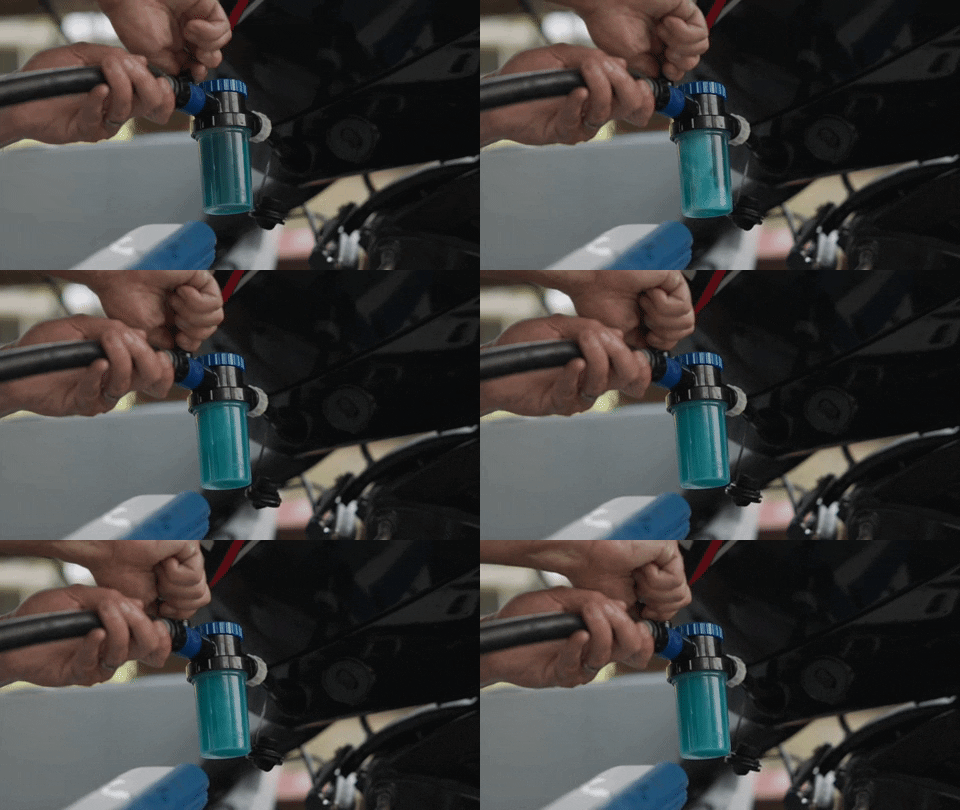
Here’s the deal: a dirty engine bay is like ignoring the oil light on your truck. You can get away with it for a while, but then it bites you—usually right when you’ve got a full boat and a cooler packed. Dirt, grease, and old leaves don’t just look bad. They trap heat, hide leaks, and can even spark a fire if things really go sideways. I learned that one the hard way—cracked hose I never saw, and suddenly my Saturday was all about bilge pumps, not beers.
Cleaning it isn’t rocket science. First, disconnect the battery. No one wants a surprise zap. Cover up anything electrical with a plastic bag and some tape—think distributor, alternator, fuse box. Then grab a degreaser (I use Simple Green, but anything that says “safe for aluminum” does the job), spray it on, let it sit for a few minutes, and scrub the worst spots with a brush. Rinse with a damp rag, not a hose—unless you like chasing electrical gremlins later.
Most gunk comes from leaky oil, spilled fuel, or just plain road dust if you trailer a lot. Wipe up drips when you see them, and check your gaskets every spring. That’s the shortcut that actually works.
If you see serious corrosion, mystery wires, or the whole bay smells like gas? That’s when you call a pro. But for the usual grime, you’ve got this. Your future self (and anyone stuck fixing it later) will thank you.
Use Digital Tools to Stay Ahead

If you want to actually stay on top of maintenance (and not just tell yourself you will), use your phone. Seriously—there are apps for this now, and they’re way better than the sticky notes on my garage fridge. I use Boat Essentials and Boating Suite. Both let you log repairs, set reminders for oil changes, even track when you last swapped the anodes. No more guessing if you did the lower unit lube last fall or the fall before.
Reminders are the real MVP. Set them for spring commissioning, battery checks, or that mid-season hull scrub you always forget. Most of these apps have checklists you can tweak—so you don’t miss the little stuff like lubing latches or checking fire extinguishers. You’ll save yourself a Saturday of catch-up work down the line.
And don’t skip safety: I keep NOAA Weather Radar and BoatUS on my home screen. They ping you if a storm’s rolling in or there’s a local safety alert. One less thing for your brain to juggle.
Don’t worry, you don’t need to be “techy.” If you can set a phone alarm, you can use these. The goal’s to make your life easier, not add more steps. Your future self will thank you—probably out loud, in the driveway.
Preventive Care Beats Emergency Repairs
Here’s the truth: a little effort now saves you from writing big checks later. I learned this the hard way when I skipped spring oil changes on my first boat. That $40 I “saved” turned into a $900 bill when the engine started sounding like a coffee grinder. Your boat’s not fragile, but it’s not bulletproof either.
Think of preventive stuff like changing your truck’s oil, swapping out smoke detector batteries, or checking the sump pump before a storm. It’s not glamorous. Nobody’s Instagramming their battery terminal cleaning. But it’s what keeps you on the water and out of the repair shop.
Here’s what I do, and what I’d tell any buddy in the driveway:
- Oil changes: Every 50–100 hours, or once a season. Don’t wait for the oil to turn black. It’s not a steak—darker isn’t better.
- Battery checks: Quick look every month. Tighten connections, check for corrosion. A $2 wire brush beats a $200 tow.
- Corrosion patrol: Especially if you’re running in salt. Spray down exposed bits, hit any crusty spots with corrosion guard. Salt eats boats for breakfast.
I keep a simple checklist on my phone. Takes 10 minutes to scan through before a big weekend. I even set a reminder for the first Saturday of every month—right after my wife’s “clean the gutters” alarm.
A buddy of mine skipped his battery checks last season. Showed up at the ramp, dead as a doornail, kids in tow. Missed half the day. Now he’s the most religious battery checker I know.
Bottom line: do the boring stuff. Your future self—and your wallet—will thank you.
Troubleshooting Common Powerboat Problems DIY-Style
If your boat’s acting up, don’t panic—most of the time, it’s not a disaster. Engine sputtering? Nine times out of ten, it’s bad gas or a loose battery cable. Pull the cover, check the battery terminals (they should be tight enough you can’t wiggle them by hand), and if you see green fuzz, grab a wire brush. For gas issues, I keep a spare fuel filter and a jug of Sea Foam in the back storage hatch. Swapping the filter takes five minutes and has saved my Saturday more than once.
Electrical gremlins are usually just a blown fuse or a corroded connector. I’ve spent an hour tracing wires only to find a $1 fuse blown under the dash. So, before you start ripping panels off, check the obvious stuff first. Keep a handful of fuses and a cheap multimeter in your kit. If you don’t own a multimeter, get one—it’s the difference between “maybe it’s the switch?” and “yep, power’s not getting there.”
Hull leaks? First, don’t freak out. If you spot water in the bilge, check the drain plug (ask me how I know). For small leaks, marine epoxy or a roll of Flex Tape will get you home. Anything bigger than a slow drip, though—call the trailer and skip the heroics.
Bottom line: if you can’t figure it out in 30 minutes with basic tools, it’s probably time for the pros. Your future self (and your wallet) will thank you.
Connect Maintenance to Your Family Lifestyle
Boat care isn’t just about shiny gelcoat or resale value—it’s about keeping the “remember that summer?” stories coming. A boat that’s looked after means you’re not cutting a trip short because a hatch latch failed or the seats are too crusty to sit on. I’ve learned the hard way: nothing kills the mood faster than pulling out a moldy life jacket in front of your kids.
Getting the family involved? Game changer. Let the kids hose down the deck (they’ll turn it into a water fight anyway), or have them wipe down cupholders. My daughter’s favorite job is vacuuming sand out of the cockpit—she calls it “treasure hunting.”
Make it a routine, not a chore. Ten minutes rinsing off the boat while the grill heats up. Quick wipe-down before you pack up. It’s like brushing your teeth—small effort, big payoff. Bottom line: Protecting your boat is protecting your weekends. Your future self—and your family—will thank you.
Conclusion
Here’s the bottom line: you don’t need to hand your boat over to a marina every time something needs doing. Most of what actually matters, you can knock out in your own driveway with a hose, a couple of decent cleaners, and a little sweat equity. Regular, seasonal care isn’t just about resale value or “investment”—it’s about making sure the boat’s ready for that Saturday when the weather’s perfect and the kids want to tube.
Skip the shortcuts that end up costing double later. Grab the right brush, use the cleaner that actually works, and you’ll dodge half the headaches I learned about the expensive way. There are apps now that’ll ping you when it’s time to change the oil or wax the hull—makes it a whole lot harder to forget and then regret.
Start small. Stay consistent. Your future self (and your wallet) will thank you when you’re not shelling out for preventable repairs. Pick one tip from above you haven’t tried yet and knock it out this weekend—your boat, and your wallet, will thank you.
---
FAQ
What is basic maintenance for a boat?
Basic maintenance for a boat includes regular cleaning, checking and changing fluids like oil and coolant, inspecting the battery and electrical connections, maintaining the hull by removing oxidation, caring for vinyl and upholstery, and ensuring all safety equipment is functional. Seasonal tasks like winterizing and spring commissioning are also essential parts of basic upkeep.
What is the 3 R rule in boating?
The 3 R rule in boating stands for Remove, Repair, and Replace. It means you should remove debris and dirt regularly, repair any damage or wear promptly, and replace parts that are beyond repair to keep your boat safe and in good working condition.
How often should I clean and polish my boat’s hull?
You should clean your boat’s hull after every season and polish it at least once or twice a year, typically in spring and mid-summer. Regular cleaning prevents buildup of grime and oxidation, while polishing helps protect the gelcoat and maintain your boat’s shine.
What are the best DIY tips for preventing engine corrosion?
To prevent engine corrosion, regularly rinse the engine bay with fresh water after saltwater use, apply corrosion guard sprays on exposed metal parts, keep the battery terminals clean and tight, and inspect gaskets and hoses for leaks. Using a trickle charger during winter storage also helps maintain battery health and prevent corrosion.
Can I winterize my powerboat myself or should I hire a pro?
You can winterize your powerboat yourself if you follow the proper steps: draining water from the engine and plumbing, fogging the engine, adding antifreeze where necessary, and protecting the battery. However, if you’re unsure or uncomfortable with any step, hiring a professional can ensure it’s done correctly and prevent costly damage.
Frequently Asked Questions
What is basic maintenance for a boat?
⌄
What is the 3 R rule in boating?
⌄
How often should I clean and polish my boat’s hull?
⌄
What are the best DIY tips for preventing engine corrosion?
⌄
Can I winterize my powerboat myself or should I hire a pro?
⌄
Related Articles
Keep reading with more practical boat owner guides.
Mar 26, 2026
Boat Insurance Basics: Straight Talk for Hands-On Owners
Discover essential boat insurance insights for DIY owners, covering what you need to protect your investment and avoid costly mistakes.
Mar 26, 2026
Why a Pontoon Boat Is the Best Bet for Family Fun
Discover why pontoon boats are perfect for family fun—spacious, safe, and easy to maintain for all your boating adventures.
Mar 26, 2026
How to Find the Best Boats for Sale Near You: Hands-On Guide
Discover how to confidently find and inspect the best boats for sale near you with insights from real boat owners.
Try Premium Boatcare
Turn insights into action with a faster workflow.
Get Started Free